

Friendship Lamp Colour Signals: How Kiwi Couples Are Creating Their Own Love Language
Quick answer: Kiwi couples using LuvLink friendship lamps assign personal meanings to different colours — a warm pink for "I love you," a calming blue for "thinking of you," a bright yellow for "call me." It's a private, wordless language built between two people. No rules. No right way. Just yours.
Sarah's partner works a 28/7 FIFO roster in Karratha. Before the lamp, she'd send a goodnight text at 10pm and never know if he'd even seen it. Now she touches the lamp white. He sees it glow on his bedside table. That's it. That's enough. What they've built together is what Kiwis are calling their friendship lamp colour signal love language — and it's entirely their own.
What Are Friendship Lamp Colour Signals — and Why Are Kiwis Calling It a Love Language?
A LuvLink Friendship Lamp syncs with your partner's lamp over Wi-Fi. You touch yours, it lights up — and so does theirs, wherever in the world they are. The lamp can glow in over 200 colours, and you cycle through shades with a simple touch. That's the mechanics. The magic happens when two people sit down together — over a video call, or in the same room before one of you flies out — and decide what each colour means to them.
That's the friendship lamp colour signal love language NZ couples have started building for themselves. It's completely personal, costs nothing extra to create, and once you've agreed on your palette, a single touch carries an entire message.
One touch, one colour, one feeling — no words needed.
If you're new to how the lamps actually work, the plain-English guide to the LuvLink Friendship Lamp is a great place to start before designing your colour system.
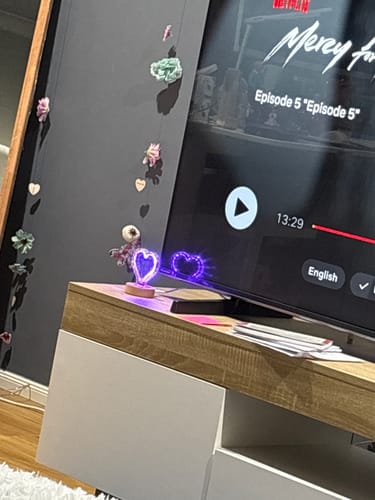
“I brought heart LuvLink just for my son and myself to know he arrived work or home safe. We both using it every day. I love it made me feeling better and knowing he is safe or me safe for him. I have other 4 LuvLink lamp for my 3 deaf friends who lives in Tassie, Melbourne, Mulwala and one for me in Sydney. We using it every day some days on and off all day and sometimes late at midnight. Good for them as we all have different types of trauma in the past and also we all have different mental ...”
Why Colour Works So Well as a Long-Distance Love Language
The five love languages — words of affirmation, quality time, acts of service, physical touch, receiving gifts — were never designed with long-distance relationships in mind. When you're in different cities or on opposite sides of the world, physical touch is off the table, and quality time gets squeezed into rushed evening calls between time zones.
Colour fills a gap none of the original five quite covers. Here's the thing: a text demands something back. A glowing lamp doesn't — and that asymmetry matters at 11pm when one of you is exhausted and the other just wants to feel present. There's no read receipt, no pressure to reply, no notification badge stacking up. The lamp just glows, warm and quiet, doing its job.
Couples across NZ have found that agreeing on lamp colour meanings creates a shared private world. It's intimacy through light, which sounds a bit poetic until you're the one watching your lamp glow soft pink at 10pm and knowing exactly what it means.
How to Build Your Own Colour Language
There's no official guide — that's the point. But here's a framework that works well for most couples starting out.
Step 1: Start small (three to five colours)
Too many meanings and you'll forget what teal was supposed to mean by week two. Start with your most-needed messages. What do you wish you could say to each other wordlessly, right now? Most couples find three to five colours covers 80% of their everyday emotional needs.
Step 2: Write it down somewhere you'll both find it
A note in your phone, a card stuck to the fridge, a shared document. The beauty of the system lives or dies on both of you remembering it. Some couples make a little card to keep next to the lamp — it becomes a keepsake in itself.
Step 3: Let it evolve
Your colour meanings will shift over time. You might add a colour for "having a rough day, could use some light" during a hard season, then replace it when life settles. The system is yours — revise it whenever you need to.
Colour Ideas to Get You Started
These are ideas only — there's no universal meaning to any colour on a LuvLink lamp. Take what resonates and leave the rest.
- Soft pink or rose: "I love you" — the classic. Simple, unmistakable, never gets old. Most couples keep this one from day one and never retire it.
- Warm yellow: "Call me when you can" — bright enough to feel like an invitation, not an emergency. Works brilliantly for couples juggling different shift times when a spontaneous call isn't always possible.
- Calm blue: "Just thinking of you" — no response needed, no pressure. Just a gentle check-in across the distance.
- Deep purple: "I miss you today" — for the heavy days when you want them to just know. No explanation required.
- Bright orange: "Good news! Talk soon" — the lamp equivalent of a happy exclamation mark. Something to look forward to.
- Red: "Need to talk — something's wrong" — reserved for genuine urgency so it always lands with weight. Keep this one rare and it stays meaningful.
- Green: "Made it home safe" — this one is especially common among Kiwi couples where one person is on a late Auckland train home from the city, finishing a long rural commute on State Highway 1, or landing back at a regional airport after a work trip. It's simple, but the relief it carries is real.
- White: "Goodnight" — a clean, gentle signal to close the day together. Common among couples separated by the Cook Strait, where one might be winding down in Wellington while the other is still at the desk in Nelson. One touch, and you've said goodnight across the water.
The best colour meanings aren't the poetic ones — they're the ones that solve a real, everyday problem in your relationship.
Making It Work Across Different Situations
Long-distance couples (different cities or countries)
This is where the colour system really shines. When you're navigating different schedules, different time zones, and the exhaustion of maintaining closeness across distance, a colour signal is low-effort and high-meaning. Your partner wakes up in Auckland and sees their lamp glowing soft pink — you lit it at midnight from Christchurch before you went to sleep. They know. No words, no waiting, no read receipts.
If your person has just moved across the Tasman, the article on connection gifts for Kiwis who've moved to Australia has more ideas for keeping that thread strong.
Couples on rotating rosters or shift work
FIFO workers, nurses, hospitality staff — couples who rarely have matching schedules know how hard it is to simply say "I made it to site" or "heading to bed now." Colour codes handle all of it without needing a phone call neither of you has the energy for at 6am.
New relationships navigating distance
You're still learning each other. Building a colour system together early is actually a brilliant way to deepen intimacy — you have to talk about what you need, what you want to communicate, what feels important. That conversation alone brings you closer.
Which Lamp Works Best for Colour Signals?
Three lamps are worth knowing about. Each does the colour-signal thing well — they differ mostly in look, feel, and whether you want to layer voice on top of light.
The Friendship Lamp is the original. It syncs over Wi-Fi, displays 200+ colours with a touch, and comes as a Set of Two — which is all most couples need to get started. If you want a sleeker, more contemporary shape that still does the full colour spectrum, the Pulse Friendship Lamp is available in Clear or Core style and suits a modern home beautifully.
The Infinity Lamp is worth a special mention if you want to layer voice on top of colour. The Infinity Voice type lets you record and receive short voice messages — so you could touch the lamp blue and leave a 10-second voice note saying "just thinking of you." Light and voice together. For some couples, that combination hits differently.
If you're unsure which lamp shape and style would suit your home, the ultimate guide to LuvLink lamp styles walks through every option with real context for Kiwi homes.
Tips That Make the System Actually Stick
Set the lamp up together — even over a video call. The step-by-step setup guide makes it straightforward, and doing it together turns the setup into a small ritual instead of a solo tech task.
Here's something counterintuitive: don't wait until you have the "perfect" colour list before you start using it. Pick two colours, agree on what they mean, and go. The system will build itself through use. Couples who wait until they've mapped out eight colours often abandon the whole thing before they've even plugged the lamp in.
Don't overthink the meanings. If you'd normally say "I love you" a dozen times a day, a pink lamp is just a quieter version of that. It doesn't need to carry the weight of a poem.
One couple from Dunedin described it this way: in the first month, they'd sometimes sit there staring at the lamp trying to remember if orange meant "good news" or "call me." Now, eight months in, her hand just reaches for it without thinking. That muscle memory is the whole point — aim for habit, not ceremony.
Acknowledge the signal. When your lamp lights up, touch yours back in response, even in the same colour. That mutual acknowledgement is what makes it feel like a conversation, not a broadcast.
And leave one colour undefined. Keep it free, use it spontaneously. Sometimes the most meaningful signal is an unexpected one with no agreed meaning — it prompts a "what did that mean?" conversation, which is its own kind of connection.
Long-distance love languages don't have to be complicated. For more on keeping closeness alive with a busy life and geography in the way, the guide to keeping long-distance friendships alive as a busy adult in NZ covers the broader picture well.
Ready to build your own colour language? Browse the LuvLink Friendship Lamp and start with a Set of Two — one for you, one for them.
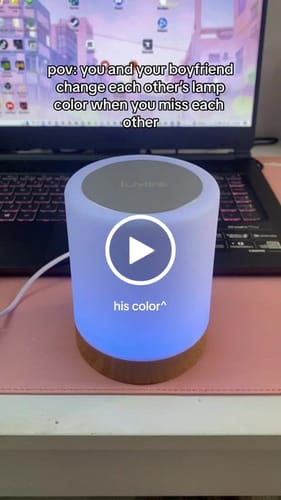
“These lamps are a perfect gift for any relationship! For your mom, dad, siblings, partners, grandparents, etc.. They’re super easy to set up, especially since there’s an app for it. The colours are really pretty, and they get sent out to other lamps very quickly! You can even connect to more than two lamps, which is amazing for family/friendship groups. I highly recommend getting these lamps for your loved ones! It’s a gift for any occasion :)”
Frequently Asked Questions
How many colours can a LuvLink Friendship Lamp show?
The LuvLink Friendship Lamp can display over 200 colours. You cycle through shades with a touch, so finding the exact hue you want for each signal is easy — from a deep burgundy to a pale lavender, there's enough range to build a genuinely personal system.
Do both people need to agree on the colour meanings?
Yes — the whole system only works if you've both agreed on what each colour means. Sit down together (in person or over video) and map it out before you're apart. It's actually a lovely conversation to have.
Can we use more than one lamp in our colour signal system?
Absolutely. The Friendship Lamp is available in sets of up to six, so if you have a group of friends or a wider family network you want to include, you can expand the system. Some couples also connect a lamp to a parent or sibling alongside their partner's lamp, using different colours to signal different people.
What if one of us forgets what a colour means?
It happens — especially early on. Keep a shared note somewhere easy to find (your phone notes, a card next to the lamp, a message pinned in your chat). After a couple of weeks of daily use, the meanings tend to become second nature, just like any shared shorthand between two people who know each other well.


